

Agent overview
The agent list shows all agents of your tenant with their publication status (active live version or “no version yet”). From here you create new agents or delete existing ones. Open the list via Agents in the sidebar.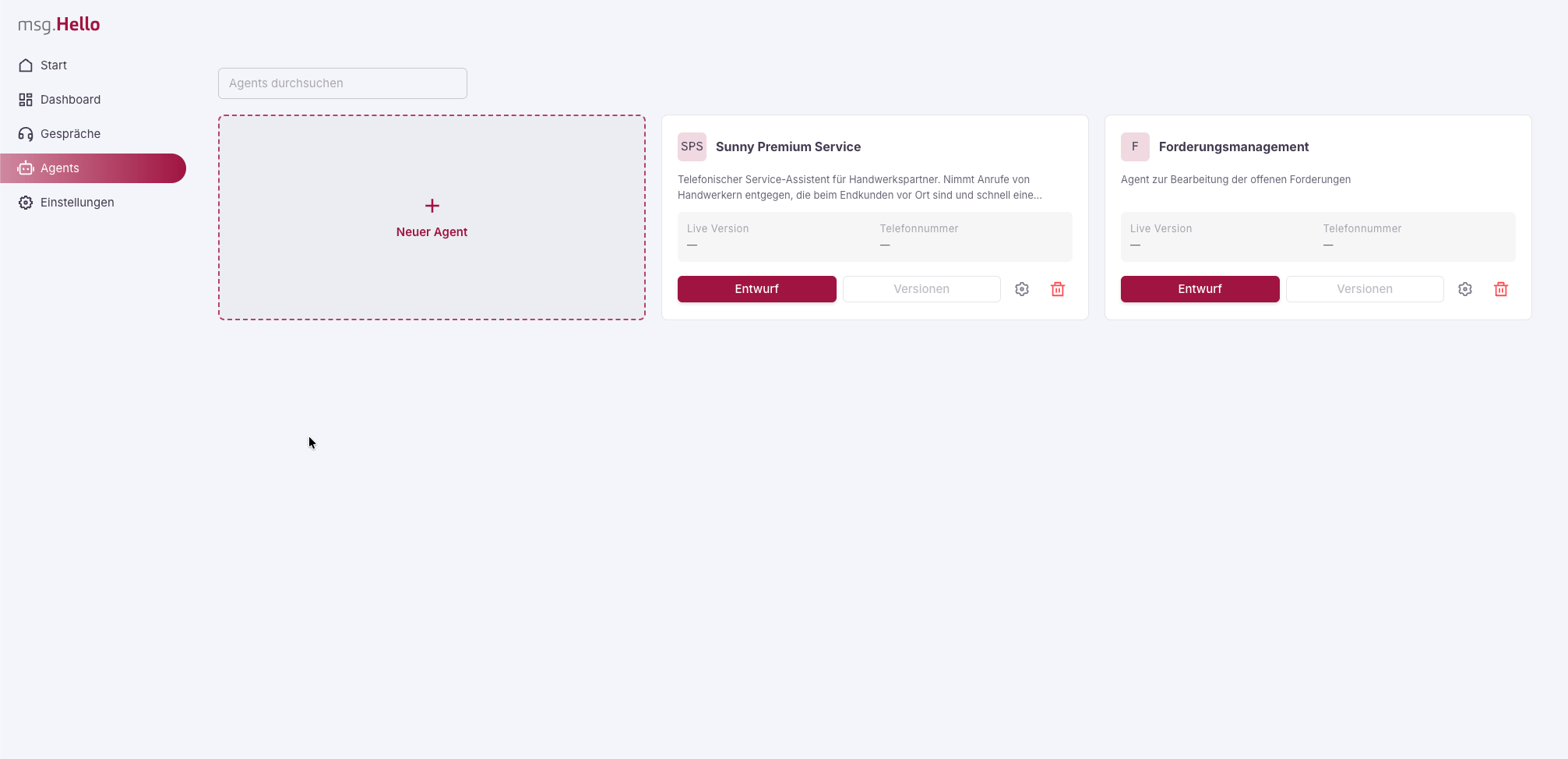
The agent list with the New agent card and existing agents.
Create a new agent
Click the New agent card. The agent wizard guides you through the basic configuration in five steps. Only the name is required – all other settings are optional and can be adjusted later.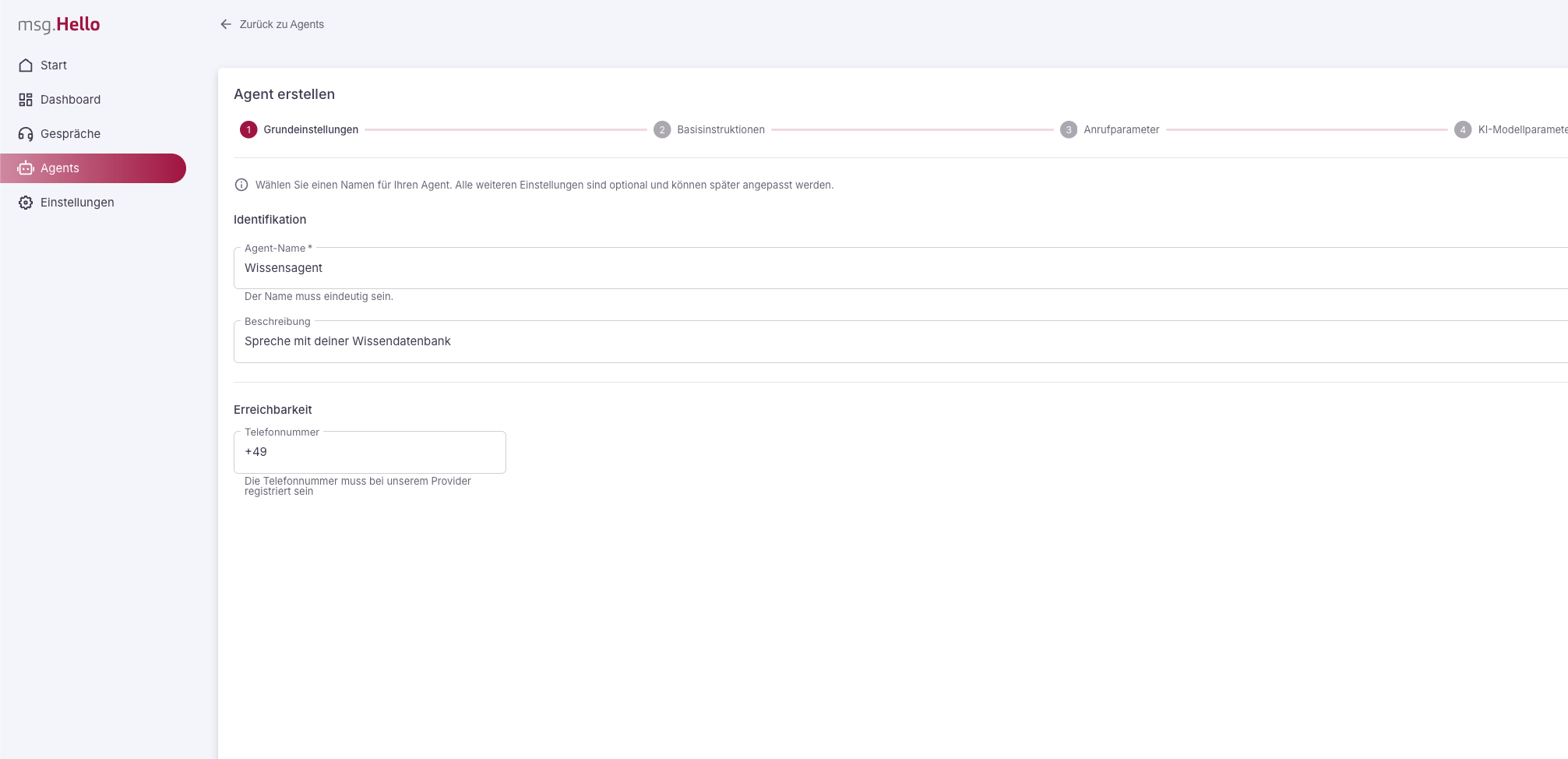
Step 1 of the agent wizard: basic settings with name, description and phone number.
1
Basic settings
Name and description of the agent as well as the phone number
at which it is reachable. The name must be unique; the phone number must be
registered with our provider.
2
Base instructions
The fundamental instruction to the agent: system role (who it is and
how it communicates), global rules for all conversations and critical
rules with the highest priority. How to word these fields well is shown in
the prompting guide.
3
Call parameters
Time limits of the conversation: maximum wait time for a user input
and maximum call duration. Both are unlimited by default and are
enabled via a toggle.
4
AI model parameters
Voice, transcription language, noise suppression and
barge-in (whether the caller may interrupt the agent).
5
Connectors
Optional connection to your business systems. Available connectors are on
the right, activated ones on the left. Details in the chapter Set up
connectors. To finish, save the agent with
Create.
Versions and going live
An agent works with versions of its flow:- You edit the draft.
- On publishing, the draft is validated and stored as an immutable, numbered version.
- You activate a version as the live version. New calls use it; ongoing calls stay on their version.
- From a version you can reopen an editable draft at any time.